So, you’re interested in a performing arts major? Awesome! Collegiate-level arts programs are a fantastic way to hone your skills, find your voice, and prepare for a professional career in the entertainment industry. That said, the process of applying to these programs is tricky to navigate and much more complicated than your typical college application.
When applying to most performing arts B.A. and B.F.A. programs, you will be tasked with many additional hurdles that other students don’t have to worry about. The first of these is the all-important prescreen audition.
What is a prescreen?
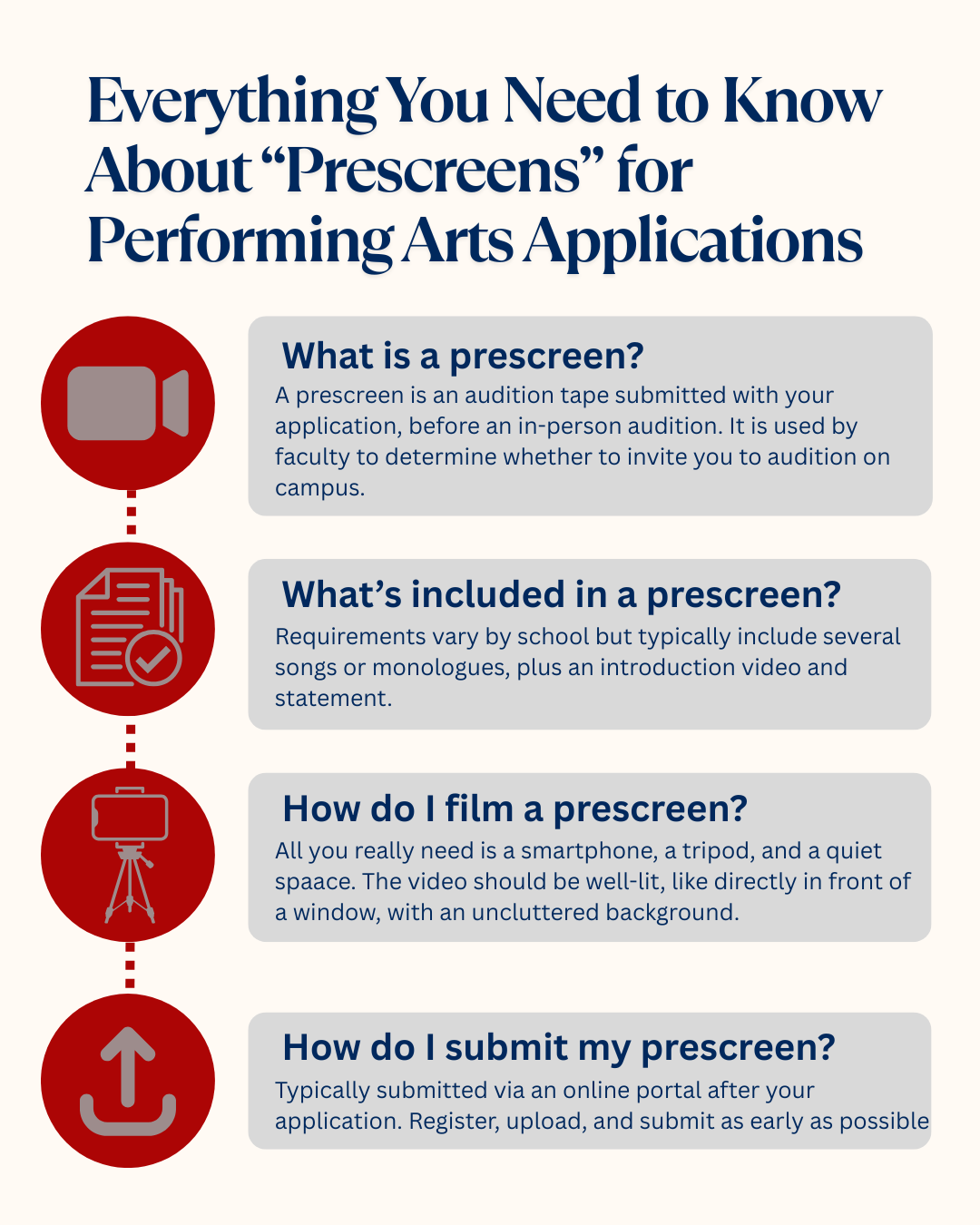
A prescreen is an audition tape you will send to colleges and universities after submitting your application but before you are invited to audition in person. Performing arts programs are hyper-competitive—some even boast admission stats that rival or exceed those of Ivy League schools. Prescreens give faculty members a brief taste of what they can expect from you during your actual audition. If it’s not the right fit, you just saved yourself a lot of time and money by not having to audition in person for a school that isn’t right for you anyway. If your prescreen is well-received, you will move on to the next step of the lengthy admissions process.
Note: Not all B.A. or B.F.A. programs require prescreens. Some majors, such as dance, tend to rely more heavily on in-person auditions. While others, such as screen acting, usually review digital audition portfolios in one go, instead of breaking up the process into rounds.
What is included in a prescreen?
Prescreen requirements are unique to each program and each school. It is imperative that you understand and abide by each program’s guidelines down to the smallest details, such as correctly labeling your MP4 files. Depending on your intended major, you will be asked to provide several filmed pieces. The songs, monologues, or materials you film should be contrasting in style and showcase the best parts of your personality and talent. You may also be asked to include a video introduction and statement, which is a great chance to connect with the panel reviewing your tape. Above all, be sure that your prescreen feels true to you. You should connect with the audition materials you select and be confident that you are showcasing your essence as a performer.
How do I film a prescreen?
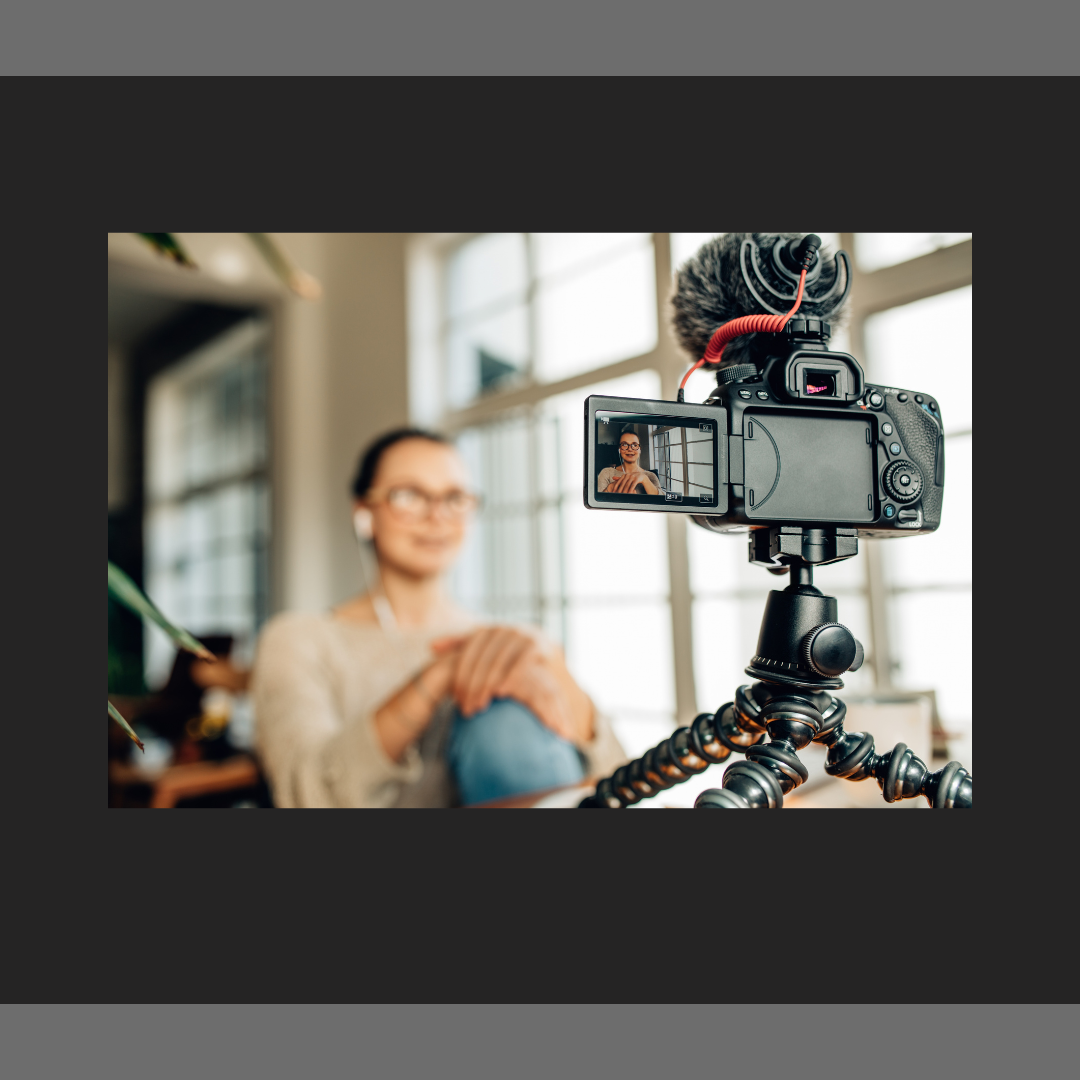
I cannot stress this enough: you don’t really need anything besides your phone and a tripod! Of course, there is no harm in making your prescreen look sleeker with the help of a ringlight, backdrop, or studio rental. However, the process of filming your prescreens should not break the bank. If you have an iPhone made in the last five years, you already have a professional-level camera at your disposal. If you have a quiet, well-lit space with a clean background, you don’t need to spend thousands on “self-tape services.” While it is important to exhibit your professionalism and investment in the audition process, these programs ultimately want to understand you and your unique talent. Bells and whistles only get you so far. Prescreens are about bringing your best self to the table, regardless of the setting you’re in.
How do I submit my prescreen?
The process of submitting your prescreens is, predictably, a little complicated and often requires strong organizational skills. Many colleges and universities have unique online portals for portfolio review. After you submit your application, they will send you a link to upload and submit your prescreen and supporting materials, such as a headshot and resume. Some schools opt for SlideRoom, which is a partner of the Common App, or Acceptd, which provides a slightly streamlined service (some musical theater programs have tried to lessen the burden of prescreens by participating in Acceptd’s “Common Prescreen”). You will need to register for each program’s website of choice as soon as you have access to it and upload your prescreens as early as possible.
Though prescreens are a lot of extra work for hopeful performing arts majors, they’re also a bonus opportunity to express your artistry. If done well, your prescreen will create excitement and anticipation for your in-person audition and serve as an important supplement to your application. Stay organized, tackle prescreens one step at a time, and trust the process.